
Unlocking Hidden Value in the Wood River Valley Economy
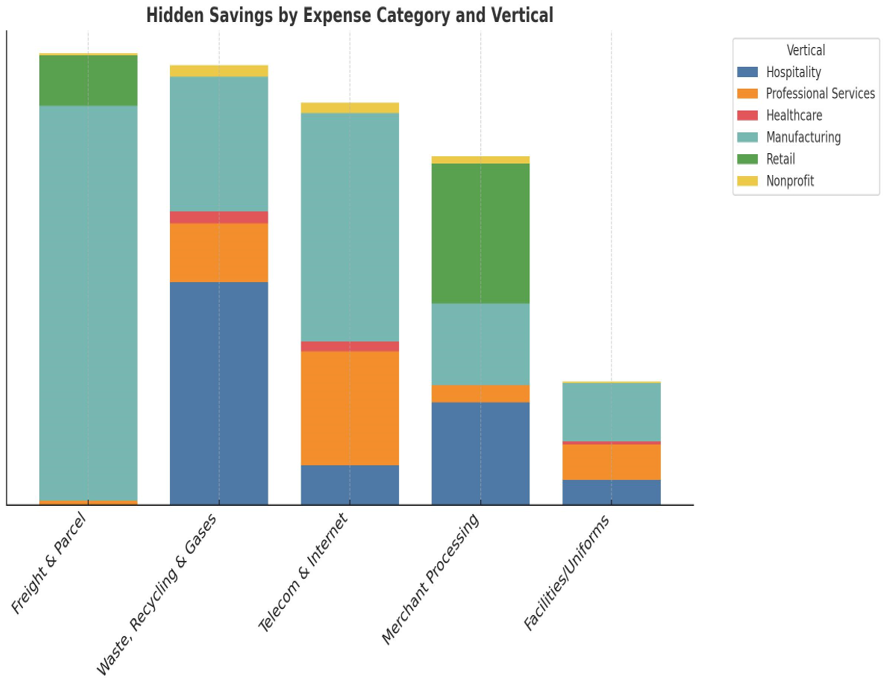
Businesses across the Wood River Valley continue to face rising costs, tighter margins, and increasing pressure to operate efficiently. A recent analysis of indirect business expenses across key local industries highlights a significant opportunity: many organizations are spending more than they need to on everyday services.
Across six sectors — hospitality, professional services, healthcare, manufacturing, retail, and nonprofits — Wood River Valley organizations collectively spend just over $300 million each year on indirect services. These include telecom and internet, freight and parcel, software, merchant processing, waste and recycling, fleet fuel, and facilities-related costs.
Using conservative savings rates tailored to each industry and category, the analysis indicates that local organizations are overspending by an estimated: ≈ $73 million every year.
These dollars represent avoidable costs — often caused by outdated contracts, billing errors, rate drift, unused services, or fees that no longer match business activity.
The Chamber recently emphasized:
“When you shop local, 68% of money spent stays in the local economy.”
The same principle applies to recovered dollars.
When local businesses reduce unnecessary spending, those funds don’t disappear — they stay here, supporting jobs, wages, equipment upgrades, technology adoption, inventory growth, and nonprofit programming.
Where the Overspend Occurs
The largest modeled opportunities are in:
- Waste & Recycling: ~$21M
- Freight & Parcel: ~$14.7M
- Telecom & Internet: ~$14.0M
- Merchant Processing: ~$10.7M
- Facilities & Uniforms: ~$6.2M
- SaaS & IT: ~$4.3M
- Fuel & Fleet Cards: ~$2.1M
These are ordinary operational costs that often drift over time without regular review. Even modest improvements can create meaningful impact because these services bill monthly and compound year after year.
Why This Matters to the Community
Every dollar that stays in the Wood River Valley strengthens the local economy.
Because many organizations operate without procurement teams or category specialists, managing these expenses can be challenging. Over time, this leads to unintended overspending — and lost opportunity.
By improving visibility into common service categories, local businesses can free up resources to:
- Hire seasonal and full-time staff
- Strengthen wages
- Reinvest in automation and technology
- Expand inventory during peak periods
- Enhance non-profit mission delivery
- Weather seasonal fluctuations with more stability
This isn’t cost-cutting for its own sake.
If you’d like to set up a snapshot or ask questions, I’d be happy to help.
John Rumasuglia works with Schooley Mitchell to help Idaho businesses improve margins and free up resources for growth. From Hailey, he supports manufacturers, nonprofits, and service providers across the Wood River Valley. More information is available at www.schooleymitchell.com/jrumasuglia