
Duke Discoveries: seeing diets through wastewater, regrowing blood vessels, heat alerts, and more
Duke Discoveries: seeing diets through wastewater, regrowing blood vessels, heat alerts, and more

August 18, 2026
Welcome to the inaugural edition of Duke Discoveries, a newsletter showcasing research from across Duke University!
This monthly offering will inform you about the cutting-edge science and scholarship happening across Duke – and introduce you to the innovators behind the work. Each issue will come in parts as we experiment with formats. The issues will be based loosely around a theme to capture the incredible discoveries being made, beginning with “Research in Our Backyard.” This is Part 1, come back for Part 2 next week!
From a new way of quantifying diets to keeping communities safe during heat waves, Duke researchers don’t need to venture far to blend expertise with impact – all for the benefit of communities near and far. Join us on the journey, and please feel free to engage and ask questions!
– Fedor Kossakovski, Director of Research Communications for Duke University
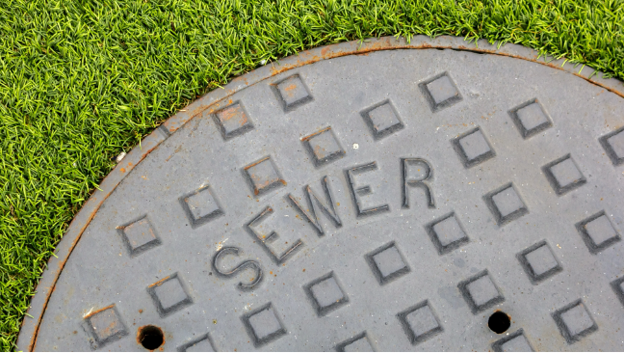
Remember how North Carolina – and places around the world – began sampling wastewater to track COVID outbreaks? Well, that infrastructure is still being used for public health monitoring of infectious diseases. What else can it be used for?
Lawrence David, a Duke University School of Medicine researcher, recently published a study in PNAS with colleagues from Duke, UNC and Virginia Tech that used this same wastewater sampling setup to mine for genetic signatures of food.
The team developed a new technique dubbed FoodSeq-FLOW, a DNA-sequencing platform attuned to plant and animal DNA, deploying it on wastewater samples from across the state. Some interesting findings include beer hops correlating with wealthier neighborhoods and specific species of fish linked to coastal regions.
Tracking nutrition and diet is notoriously tricky, often relying on self-reported surveys. Wastewater sampling can provide a new tool for researchers and policymakers to discuss food consumption with quantitative data.
There’s interest in this tech locally. David and the team have started a partnership with Durham’s Hayti neighborhood – which is looking for ways to show changes in community nutrition as they work to bring a Black-owned full-service grocery store to the area.
Read more about this research on the School of Medicine website and in The New York Times.

Sharon Gerecht and her lab at Duke University Pratt School of Engineering used induced pluripotent stem cells to rebuild specialized retinal blood vessel cells in mice. This work provides a path to new treatments for various eye diseases. Read more from Pratt – original paper in Nature Biomedical Engineering.
Jin Bai and Lydia Olander at the Nicholas Institute for Energy, Environment & Sustainability were part of a project helping the NC Wildlife Resources Commission assess streams in western North Carolina impacted by Hurricane Helene. Read more from Bai on how this work can help protect Eastern Hellbenders.
Daniel D. Richter and his lab at the Duke University Nicholas School of the Environment led a study characterizing toxic metals left behind in Los Angeles neighborhoods after the 2025 Palisades and Eaton fires. The study offers insights on the effectiveness of post-fire cleanup efforts. Read more from Nicholas – original paper in Environmental Science & Technology Letters.
Nobel Laureate Robert Lefkowitz and his lab at the Duke University School of Medicine have, for the first time, managed to chemically control β-arrestins – important signaling proteins found throughout bodily systems. Read more from School of Medicine – original paper in Nature.
Anna P. Smith, Ph.D. and her advisors at the Duke Trinity College of Arts & Sciences investigated how memory enhances viewers’ appreciation of abstract art. Read more from Trinity – original paper in Memory & Cognition.
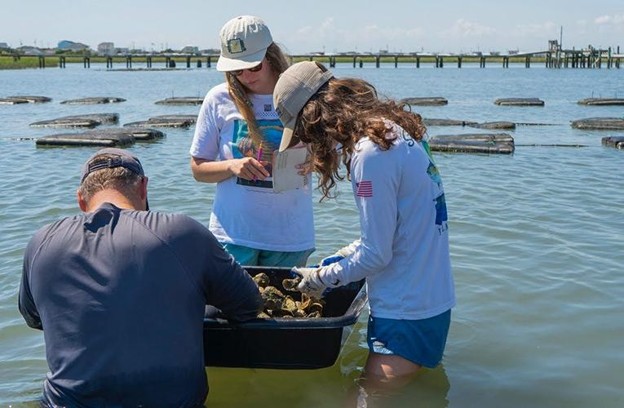
Amelia McDonald and Diandre’ Richie, MEM, masters students at the Duke University Nicholas School of the Environment , are part of a Duke University, Bass Connections team that has been exploring the effects of a changing climate on oysters.
Working at the Duke Aquafarm at the Duke University Marine Lab, the team measured how environmental stressors like warming temperatures and rising acidification impact the growth of oysters. They also tracked changes in which genes are expressed by the oysters, hoping to identify markers of resilience.
Oysters are not only a delicacy; they are also effective filterers of coastal waters. Understanding how oysters are responding to climate change will allow oyster farmers and coastal managers to make informed, collaborative decisions on the future of aquaculture and climate resilience for the N.C. coast.
Dive into oyster research on the Nicholas School of the Environment website.

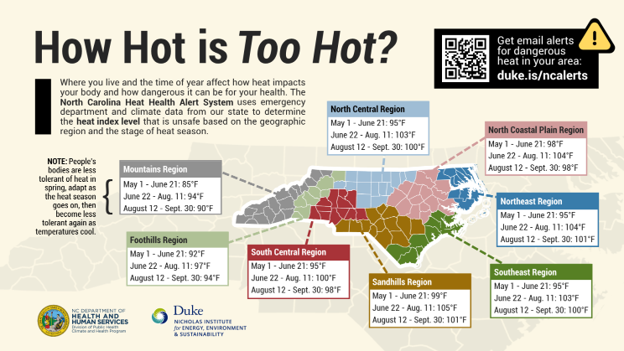
The extreme heat in our backyard and beyond has been brutal this summer. But when does heat become dangerous? And how can we be better prepared when temperatures spike?
The Heat Policy Innovation Hub at the Nicholas Institute for Energy, Environment & Sustainability has been collaborating with the state of North Carolina to build out its N.C. Heat Health Alert System.
Hub researchers, led by director Ashley Ward, helped update the system to feature temperature thresholds for alerts based on when people have historically shown up in N.C. emergency departments with heat-related issues. This has led to a more dynamic and effective system, providing more regionally- and seasonally-specific alerts.
Learn more about how heat alerts keep N.C. communities safe on the Nicholas Institute website.